Neil Slorance and Dan Berry sit down to talk about process, working with a writer, reviews and being part of a creative community.
Check out the Patreon page for the show! Donate a dollar or two per episode to help support the show’s production.

Neil Slorance and Dan Berry sit down to talk about process, working with a writer, reviews and being part of a creative community.
Check out the Patreon page for the show! Donate a dollar or two per episode to help support the show’s production.
I get asked questions occasionally about the process of making comics. I’ve passed this particular question on to a handful of the people I’ve interviewed for them to answer, and I’ll post up more as they come in.
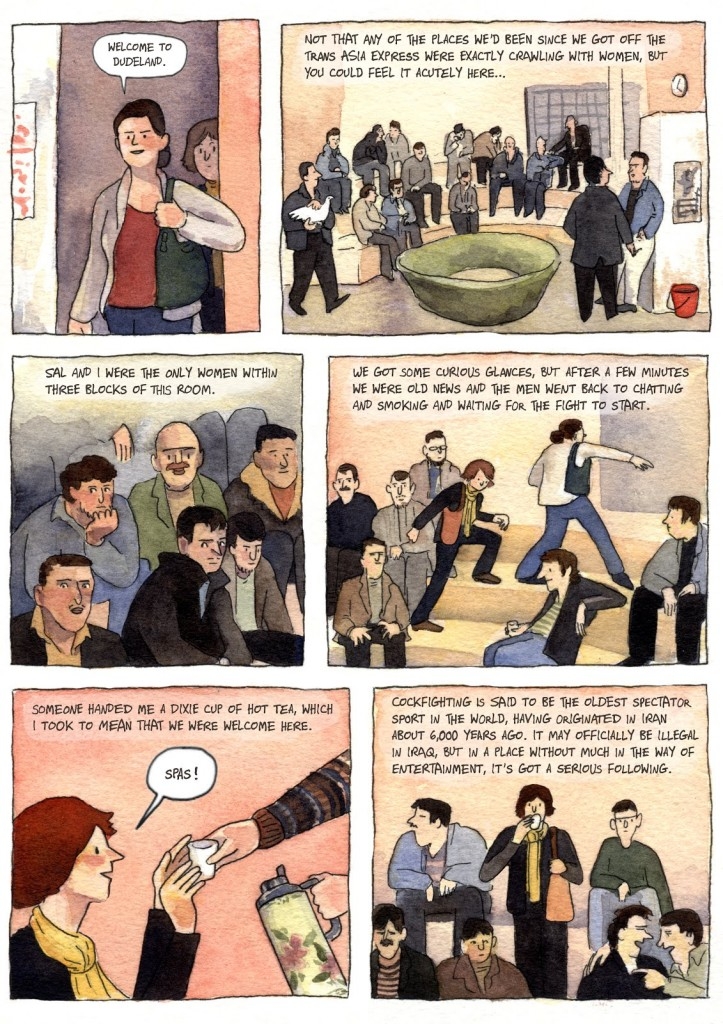
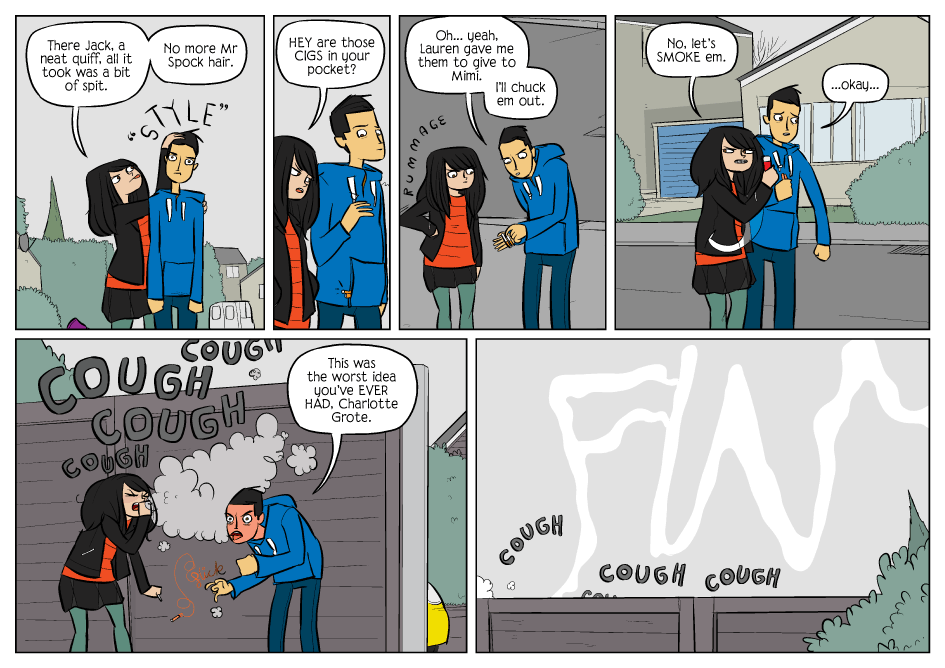
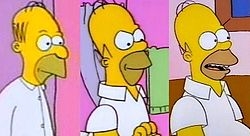
I remember this being a big concern of mine when I started drawing comics, and I get asked this pretty frequently. Probably more of a concern that actually telling a story if I’m honest. I think this is a question that gets asked a lot because it is so apparent when the characters don’t look consistent. Here’s how John Allison, Viv Schwarz, Glyn Dillon and Sarah Glidden tackled this topic;
John Allison (Listen to his interviews here and here)
I’m not sure I ever worked this out in a scientific way. When I was a kid, I drew Transformers comics, and because I was a kid who liked the toys, I knew where all the different bits of their faces went. Optimus Prime had that barn door over his mouth, Jazz and Blaster had visors over their eyes, Shockwave had a hexagon head. Their blocky appearance made getting all those bits in line easier.
I think that’s still what I do. I know what shape a character’s face is, what shape their nose is, what kind of eyes they have, and I put them in the same place each time. And I know that if I don’t properly work out a new character today, and try to draw them several times in the same comic, they don’t look the same each time. It’s not magic, you just get better at copying yourself.
Viv Schwarz (interviewed here and here)
Good question.
I draw my characters without worrying too much beyond a simple set of rules about their individual proportions, concentrating more on their stance and expression. Then I check all the drawings, comparing them carefully and correct them in Photoshop where they are too far off.
I allow myself some room for variation because my characters tend to be a bit amorphous, their whole shape changes with emotion and their features wander a bit – that’s what I’ve observed happens in animals where feathers, fur or loose skin allow for a lot more expressive shape shifting. I am allowing that for my human characters to some extent as well because I think it reads just fine. I’m also making all the characters in any given story look quite different so that they are easy to recognise even if their shape varies a bit.
I couldn’t keep the faces completely consistent anyway because I myself can’t recognise real people by their features and have to memorise their voice, smell, stance, hairstyle and so on instead. I think that actually helps my drawing more than it hinders.
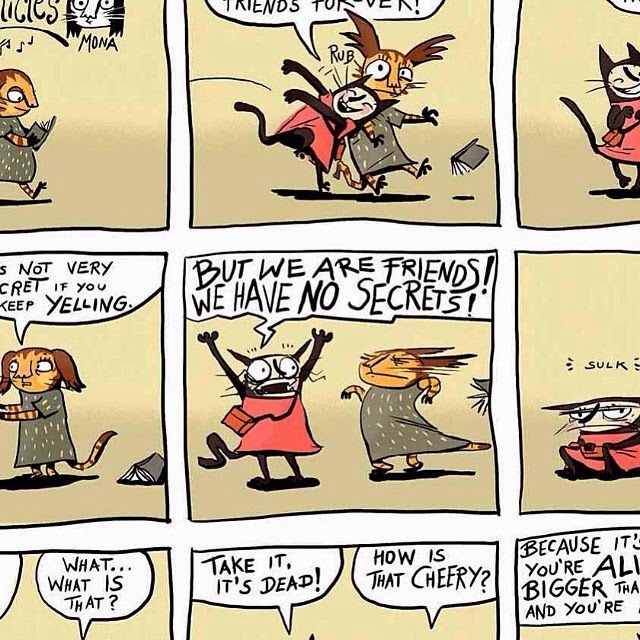
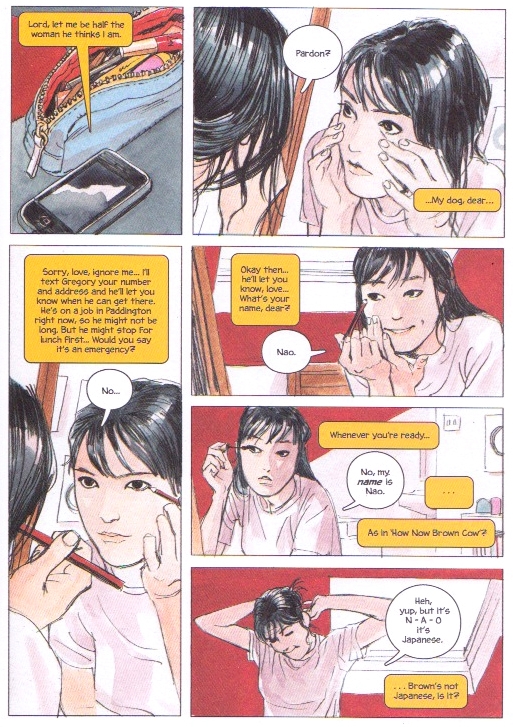
Glyn Dillon (Interview here)
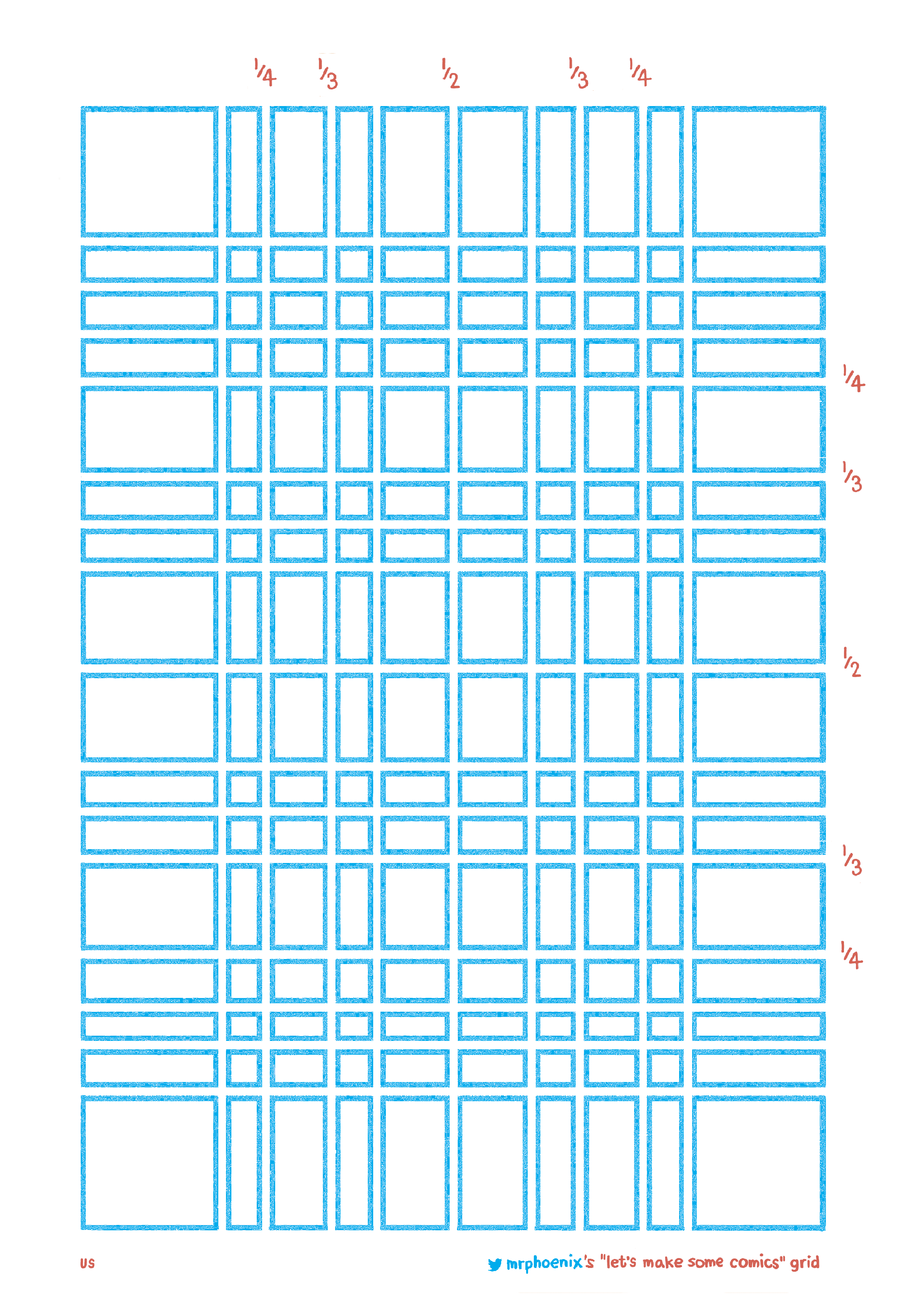
Woodrow Phoenix and Dan Berry talk about the shape of stories, typography, pushing the boundaries of what you can do with comics and an enormous book that you can not buy on Amazon.
Be sure to check out the Make/Tell Patreon campaign and consider donating a dollar or two per episode to help in the production of the show.
John Porcellino and Dan Berry get together to talk about 25 years of King-Cat Comics and Stories, punk rock, style, sickness and health. John also has a new book coming out imminently from Drawn & Quarterly entitled The Hospital Suite and a US tour, so check both out quick as you can!
Also check out the Patreon campaign to help support the show. Every one of your dollars helps in the production of this show a great deal.

Patrick Kyle and Dan Berry talk about self publishing, risographs and dream logic. Patrick’s book Distance Mover is out from Koyama Press in September.
Jesse Jacobs and Dan Berry’s conversation about process, stories, sketchbooks and wilderness confection is made all the more dramatic by being recorded during a booming thunderstorm.
Help support the podcast with your hard earned dollars on the show’s patreon page!
Alec Longstreth and Dan Berry talk about convention etiquette, the whole years of his life represented by a book you could kill someone with and his Schedule.
Check out the Patreon campaign to help support the show!
Renee French and Dan Berry talk about getting into a project, falling in love with drawing tools, where ideas come from and how they incubate.
Get over to Patreon right this second to help support the show!
Phil McAndrew and Dan Berry talk about pitching a tv show, the similarities between working with an idea and squishing a bug and Super Obvious Secrets.
Head over to the Make/Tell Patreon page to help support the show
Annie Koyama of Koyama Press and Dan Berry get together to talk about how publishing works, the life of a book, how Annie became a publisher accidentally, trusting taste and taking risks.
Consider supporting the show with as little as $1 per episode through Patreon.
Andrew Fulton and Dan Berry talk about quality of line, thinking with drawing and minicomics. We’ve also teamed up to give one of you listeners the chance to win a year’s subscription to the Minicomic Of The Month Club. All you need to do is go here and fill out your email address by the 20th July to be in with a chance of winning a minicomic delivered through your front door every month for a year!
Nick Abadzis and Dan Berry talk about ideas, the development os a style, motivation, work ethic and letting a story reveal itself to you as you write it.
John Martz & Dustin Harbin talk to Dan Berry about the worst, most hackneyed interview question you can ask a creative person. I can’t even type it in here, it is that bad.
Jason Shiga and Dan Berry talk about writing stories and the tendency to start writing the biggest stories, money, mathematics and choose your own adventure books. Go and read Jason’s webcomic Demon from ther start here.
Simon Moreton talks to Dan Berry about his work and the three Ms; Memoir, Memory and Minimalism. Simon has a new book coming out from Avery Hill Press soon, perhaps you should buy it.
Also check out the parade of kind-hearted champions who help support the show via Patreon. Perhaps you’d like to join them too!
Christopher Butcher, Director of the Toronto Comic Art Festival (amongst other things) talks to Dan Berry about how TCAF works, how his various jobs overlap and what it is like to feel responsible for over 400 cartoonists at the same time.
Check out the Patreon campaign to help support Make It Then Tell Everybody. Patreon make it very easy to pledge $1 (or more) per episode to help me make the show.
A few days ago on twitter I mentioned I was going to put together a frequently asked questions page for this site, which prompted amongst others the questions below. I’ve answered them from my perspective and experience, so they are by no means definitive, but feel free to chip in (constructively) in the comments.
Where do I find the ‘perfect’ pen?
Speaking as someone who has been on the hunt for that elusive ‘perfect pen’ for many years now, I feel somewhat qualified to answer this question. The answer is ‘I don’t know’. I can explain from my perspective and see if that helps, but the short answer is ‘I don’t know’. This all depends on what your idea of perfect is. It took me a long time to work this out. When I started drawing with any sense of purpose, I was under the assumption that better tools would make me a better artist. I tried a huge variety of pens and other drawing tools without any real idea of what it was I was looking for. It was like walking into a shoe shop and trying on every pair of sports shoes, sandals and slippers without knowing what purpose I needed them for, but assuming that I’d know when I found it.
The key thing that you need to know when trying out different tool in this hunt is to know what you are looking for. The criteria I started with was waterproof ink, flexible line and comfortable to draw with. This meant I was looking for either a brush or a fountain pen with a flexible nib. This narrowed the range of possible pens I was looking for, and it became easier to rule certain pens out for not being flexible, being uncomfortable or uncomfortably expensive. Scouring pen forums, asking advice on twitter and reading reviews other people have written have all been informative and helpful, but only to the point of knowing someone else’s opinion. I found it particularly useful to spend some time talking to a pen dealer who exhibits at pen shows (yes, they exist) who was incredibly helpful.
To recap, I think it’s a very good idea to have an idea of what characteristics you want your line to have and how much you are willing to spend. It is also worth asking yourself why you want a new pen as well. Are you trying to achieve greater efficiency in your process? Trying to bring a particular characteristic of line into your work? Or. Are you looking for the kind of pen that can draw horses best? I’m afraid those pens don’t exist and what you really need to do is spend more time drawing horses.
If you are collecting small strips together into a book, how do you create a ‘flow’ / select the order?
A very good question. The answer to this one is also ‘I don’t know’. It all depends on the content of the strips. Can they be themed? Are they continuous or can you drop in anywhere? Are some longer than others or are they all one page strips?
My advice here would be to start by making the order logical – perhaps in date order. Then read it through (actually read it, don’t skim it) and then make edits from your impression of how it reads. Trust your gut. Remember that if you have ‘reveals’ or punchlines on pages that are visual or spanned across multiple pages, you want the impact to be on the left-hand page so that it is revealed on the page turn, rather than on the right hand page where it is revealed before you’ve read the setup. The hardest bit is making cuts. If you show your draft to someone and they don’t get it, the problem may not be with them, your strip just might not be that good. At this point, you need to be merciless and cut anything that isn’t working.
If you are left handed how do you prevent your big fat hand from smearing all your beautiful ink pictures to a blob?
There’s a short answer and a long answer to this question.
The short answer; by not rubbing your big fat hand all over it.
The long answer; You get taught when you are a kid that you start at the top left of the page and work to the right and down, which if you are left-handed means you are going to be resting your hand where you’ve just been drawing, resulting in that ghastly smudge. There’s no rule saying that you have to particularly start anywhere on a page, so my advice would be to plan your drawing out ahead of time and start from the top right hand corner instead. It may be worth exploring ink and paper combinations that dry more rapidly. I’ve found that Platinum Carbon ink and cold pressed watercolour paper dries fairly quickly, but it’d be worth trying out a few variations to see what works best for you. That or scheduling frequent and prolonged coffee-breaks between sections of drawing to allow it to dry.
Strategies for how to keep going if your life is a mess?
Again, I think that this all depends on context. How much of a mess are we talking here? If your situation is serious and the wellbeing of others is at stake, I’d say prioritise that over drawing. If it is one of those existential malaises, an eternal ennui that hangs over you like a cloud, then again, think about what you’d rather be doing. If the answer is ‘I’d rather be watching television’ then do that. If your answer is ‘I’d rather be drawing/writing/etc’ then do that instead. Plan your time ahead and figure out what you can achieve in the time that you have. I remember reading about the 1833 factories act and the idea of the 8 hour day, which meant that people had in every 24 hours 8 hours work, eight hours recreation and eight hours sleep. That seems like a huge amount of time each day to me, so figuring out what time you have, what activities make you happiest and the best way to cram one into the other works for me.
How do you come up with your ideas?
The eternal question. I think it cuts to the core of the creative process without ceremony or blowing too much hot air around. The short answer is still quite a long answer, and it is a three-parter for me. I read somewhere a while ago about the idea that creativity has three prerequisites – the physical, the cognitive and the aspirational and this works for me.
The first prerequisite for creativity is the physical means for expressing it, the ‘ability to make lines on paper’ stuff. I often get ideas from the physical act of playing with art, with materials and with processes. The act of producing ‘stuff’ for me sparks off new ideas that bump into other things I’ve already done and make new ideas.
The second prerequisite is the cognitive problem solving aspect of creativity. This is the ability to think creatively around a problem, brief or topic. This is the stuff that only lives in your head until you put it on paper.
Now, you’d think that these two by themselves would be enough, but the without the third prerequisite, the motivation to put them both into practice, you don’t do anything.
Each of these three aspects of the creative process can live alone without the other two, but just drawing aimlessly, having grand plans that come to nothing or even just the ‘one day I’m gonna…’ impulse don’t really cut it for me. When the three come together, you not only have ideas but you also put them together.
The shorter answer is to say that a lot of coming up with ideas is recognising when I’ve actually had an idea. It is very easy to dismiss an idea before it has had a chance to flourish, and it is a skill to take the seed of an idea and recognise that it may need developing until it is good.
Adam Murphy and Dan Berry talk about working with rules, honesty, story structure, audiences and The Big Existential Art Questions.
Sam Alden and Dan Berry talk about creative processes, work ethics, developing a style and all the associated guilt that goes along with making comics.
Also check out the Patreon campaign to help support the show. Give $1 an episode and help Make It Then Tell Everybody grow.